

Your business is growing, revenue is coming in, but do you have the financial clarity to support its next stage of growth? Maybe cash flow is tighter than expected, profits are falling short of your goals, or you're facing big decisions without a clear understanding of the financial impact.
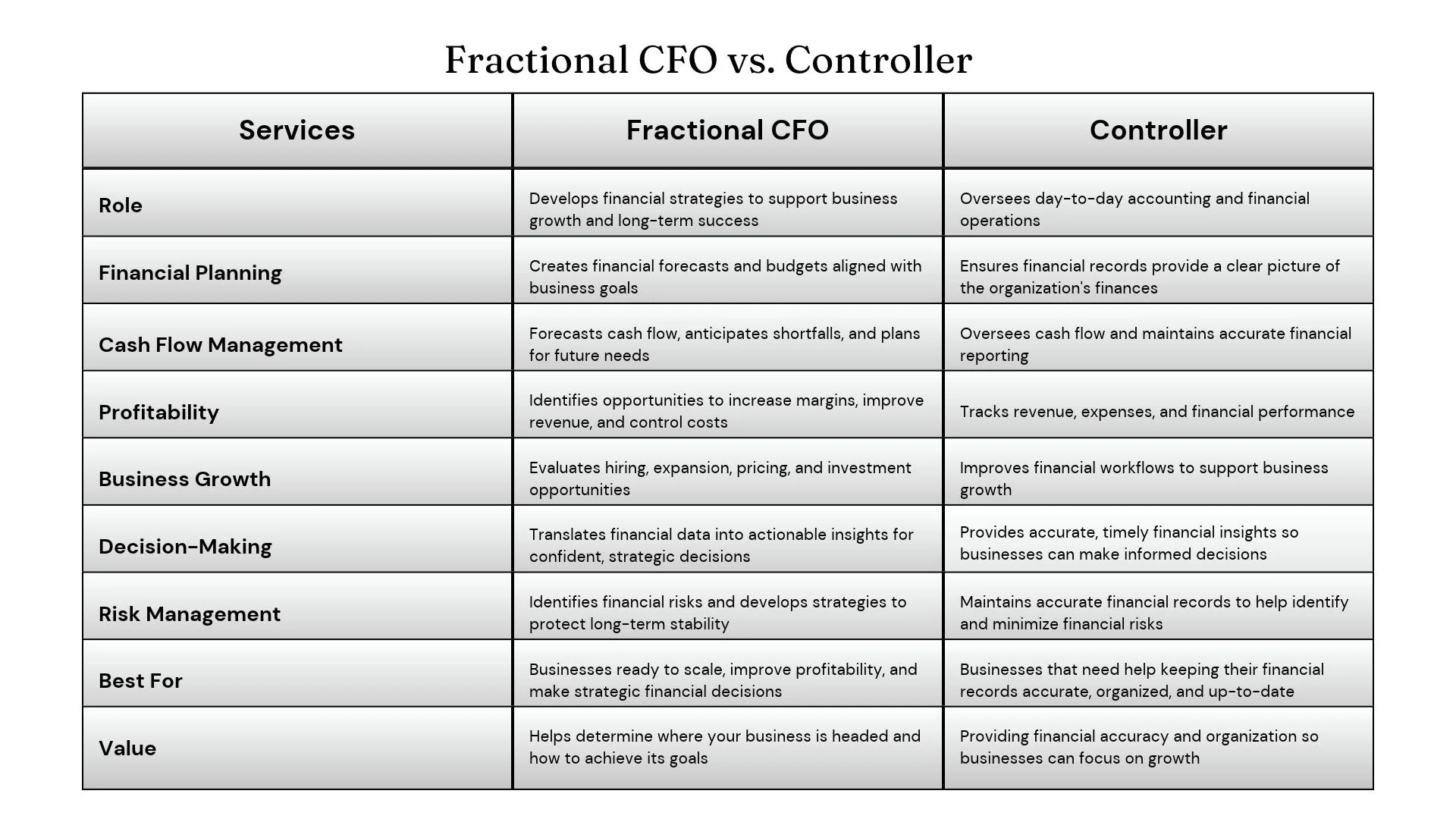
As businesses grow, these challenges are common and point to a need for a higher level of expertise and oversight. A fractional CFO or financial controller can help address these challenges and support the next stage of growth. But which one does your business need? Here are the differences between a financial CFO and a controller.
Get Strategic Financial Clarity & Support For Your Growing Business
As your business grows, having accurate financial information is only part of the equation. You also need to understand what your numbers are telling you, anticipate financial challenges, and make decisions that support long-term profitability.
If you're not sure which type of financial support your business needs, Quipped Method can help you evaluate your current financials and identify opportunities to improve performance. Schedule a complimentary strategy call with us to discuss our strategic advisory services.
FAQs
-
A growing business should consider hiring a fractional CFO when financial decisions become more complex. Difficulty managing cash flow, forecasting revenue, shrinking profit margins, inaccurate forecasts, and uncertainty around hiring or expansion are all signs that more strategic financial guidance may be needed.
-
Yes, businesses can benefit from having both. The controller keeps the financial records accurate and accounting operations running smoothly, and a fractional CFO looks at the bigger picture, using those financial insights to guide strategic decisions, strengthen profitability, and position the business for long-term growth.
-
A bookkeeper or controller can help maintain accurate financial records and reporting, but that doesn't usually help with strategic financial guidance. A fractional CFO helps business owners interpret financial data, identify opportunities, address risks proactively, and help owners make confident business decisions.
-
Startups should bring a fractional CFO sooner rather than later. A fractional CFO helps founders with forecasting, managing expenses, preparing to scale or raise capital.
Miami | Palm Beach | New York | Serving Clients Nationwide
